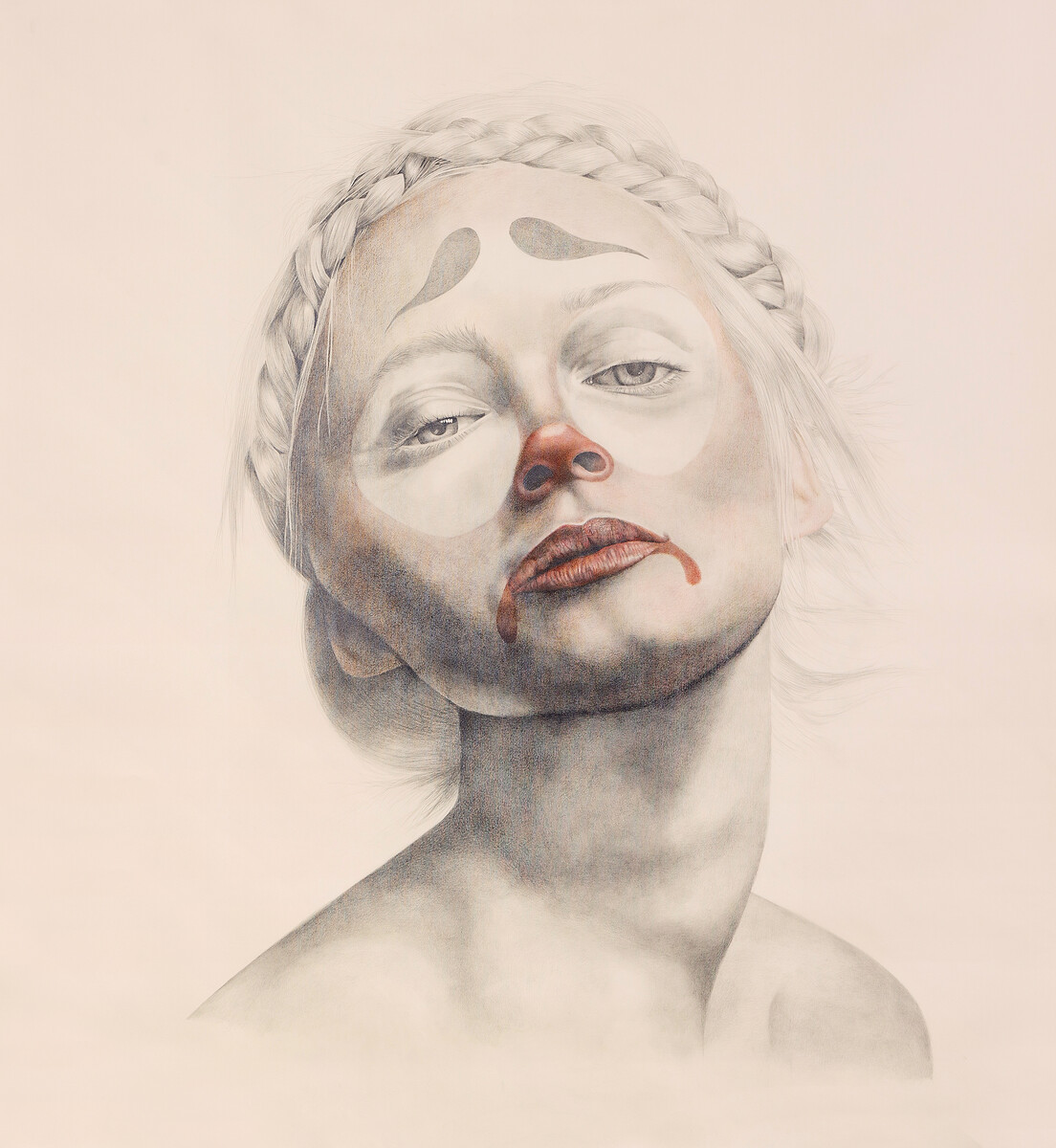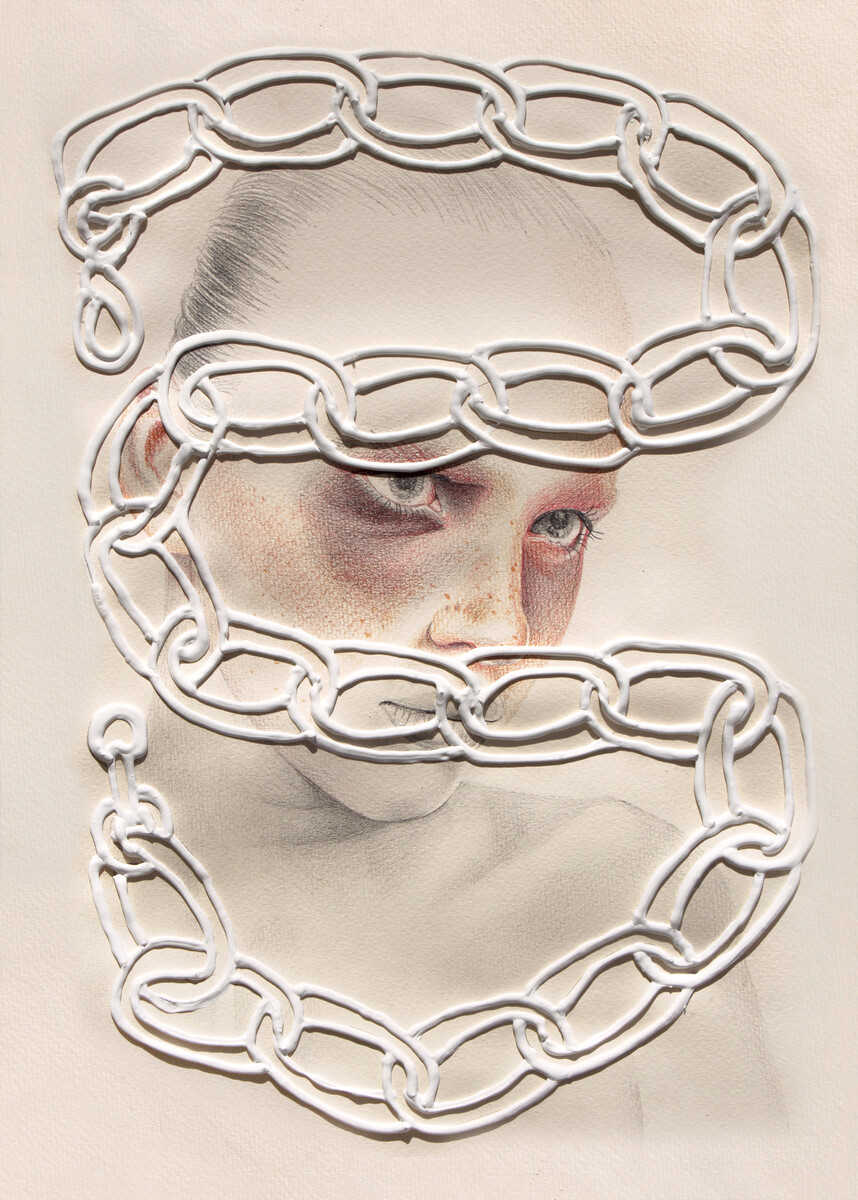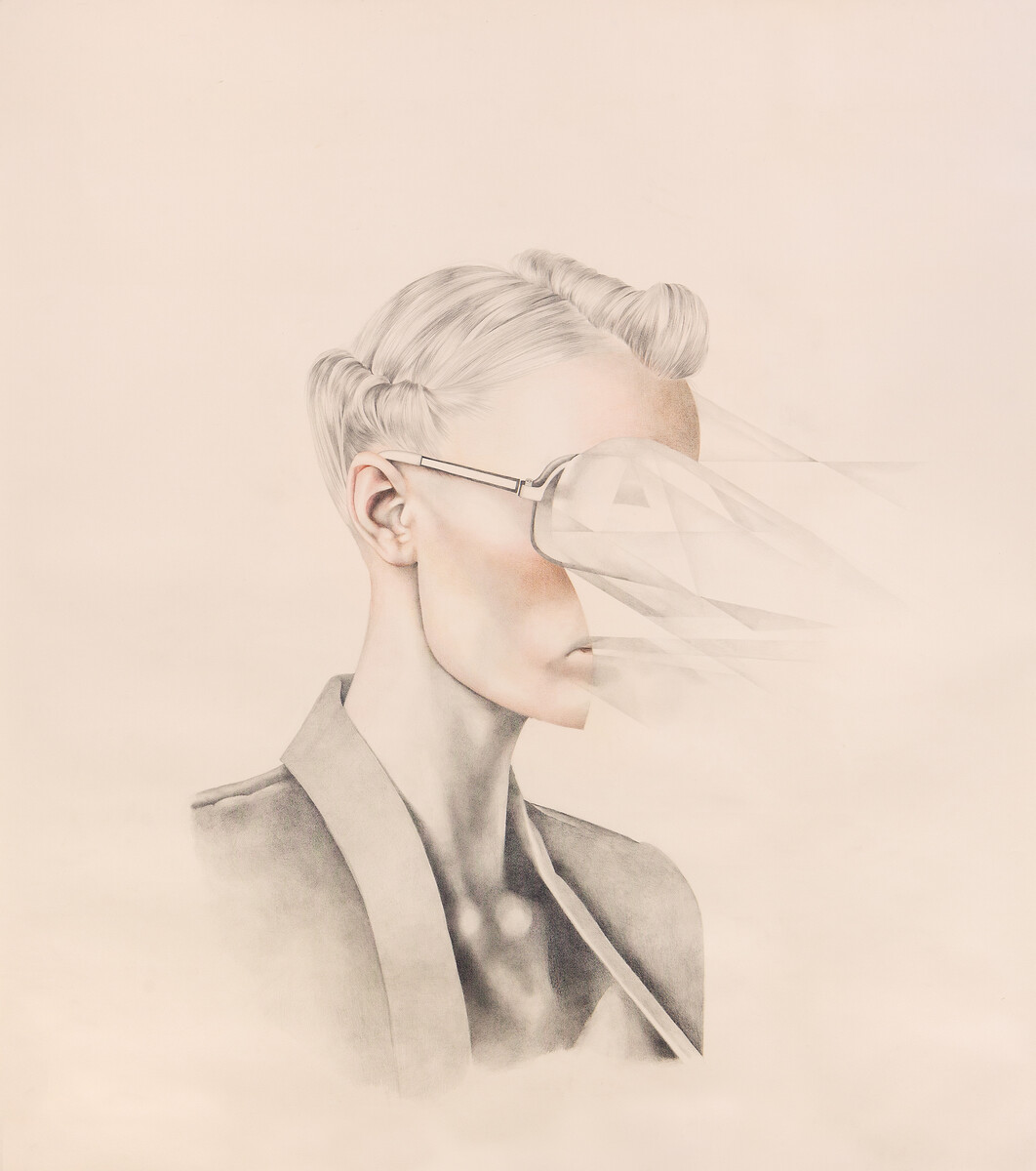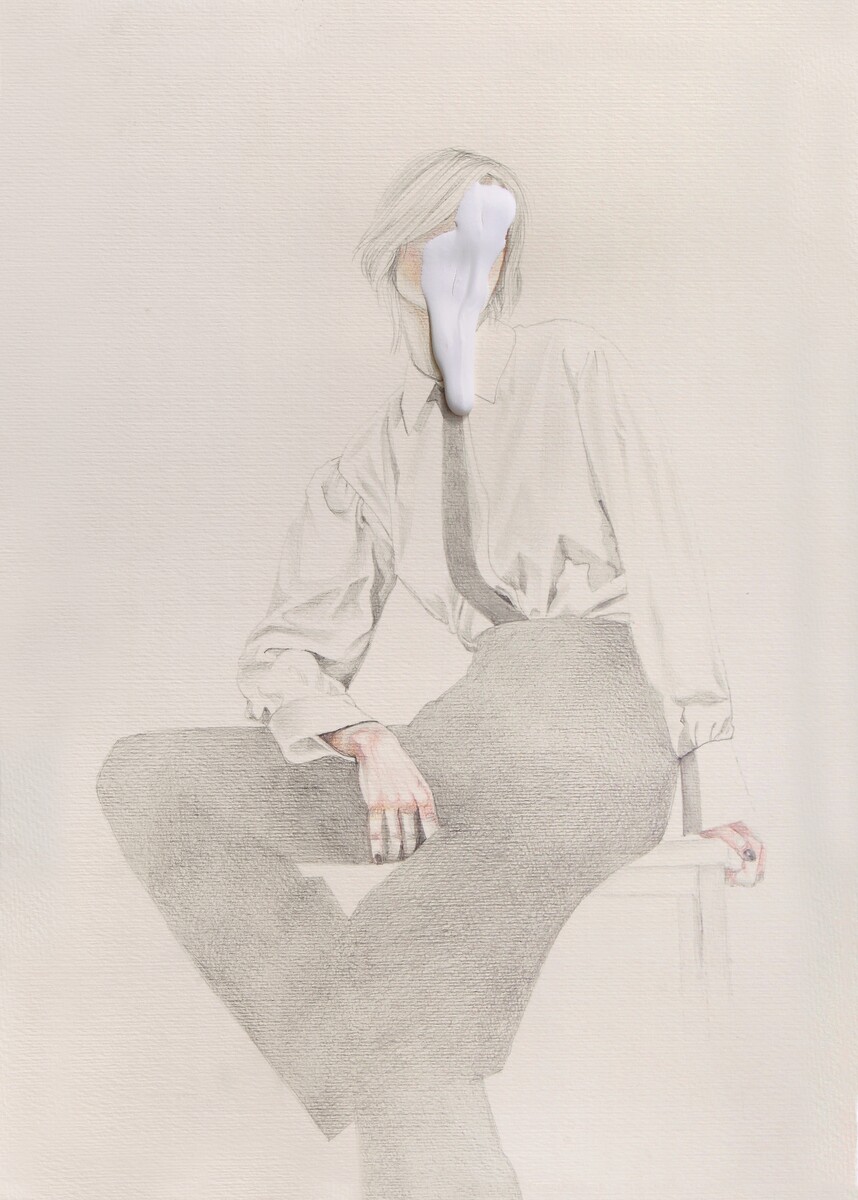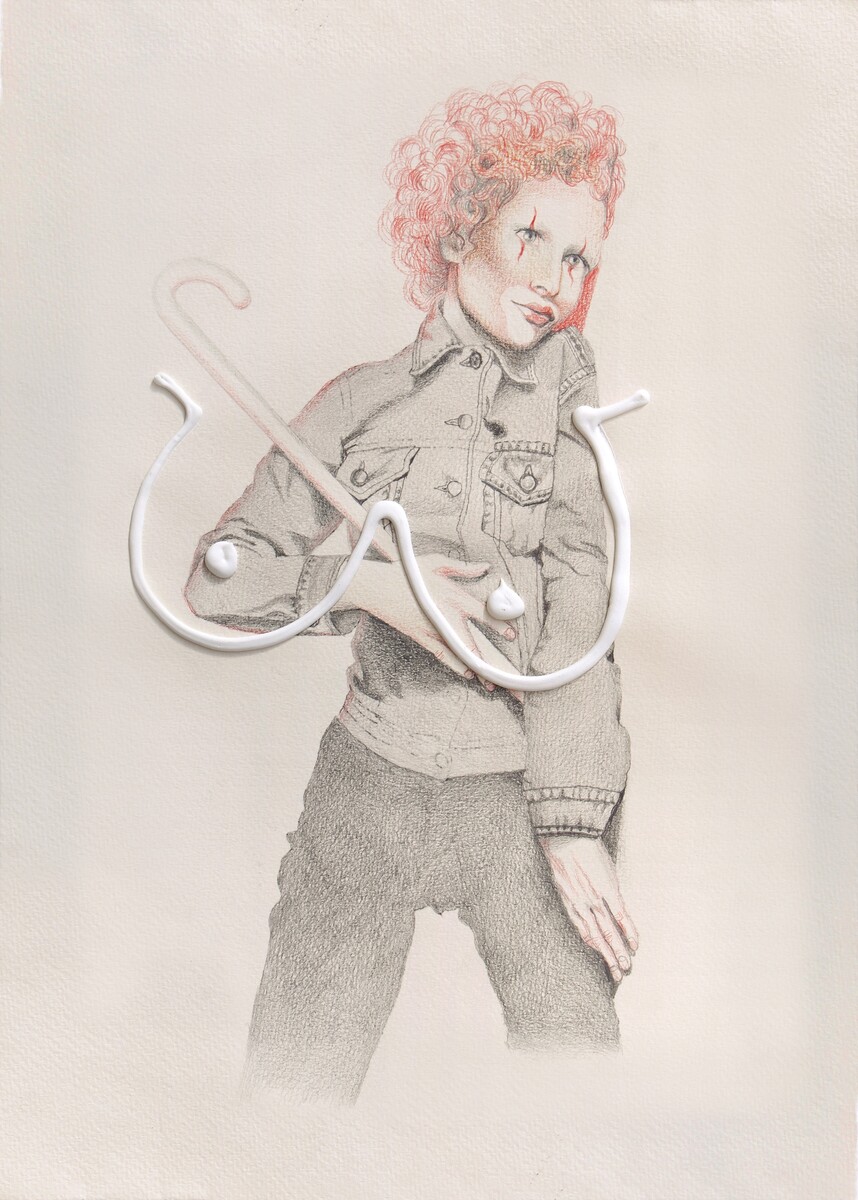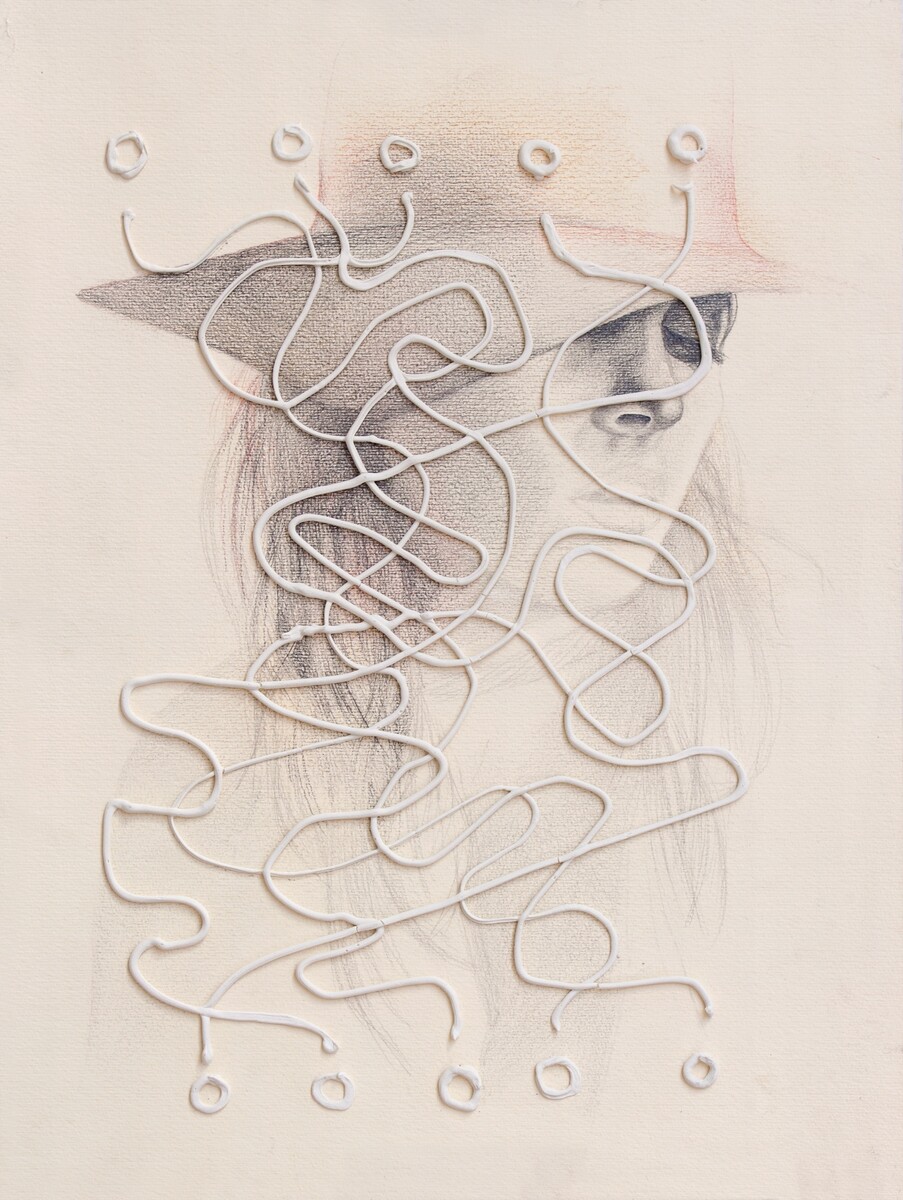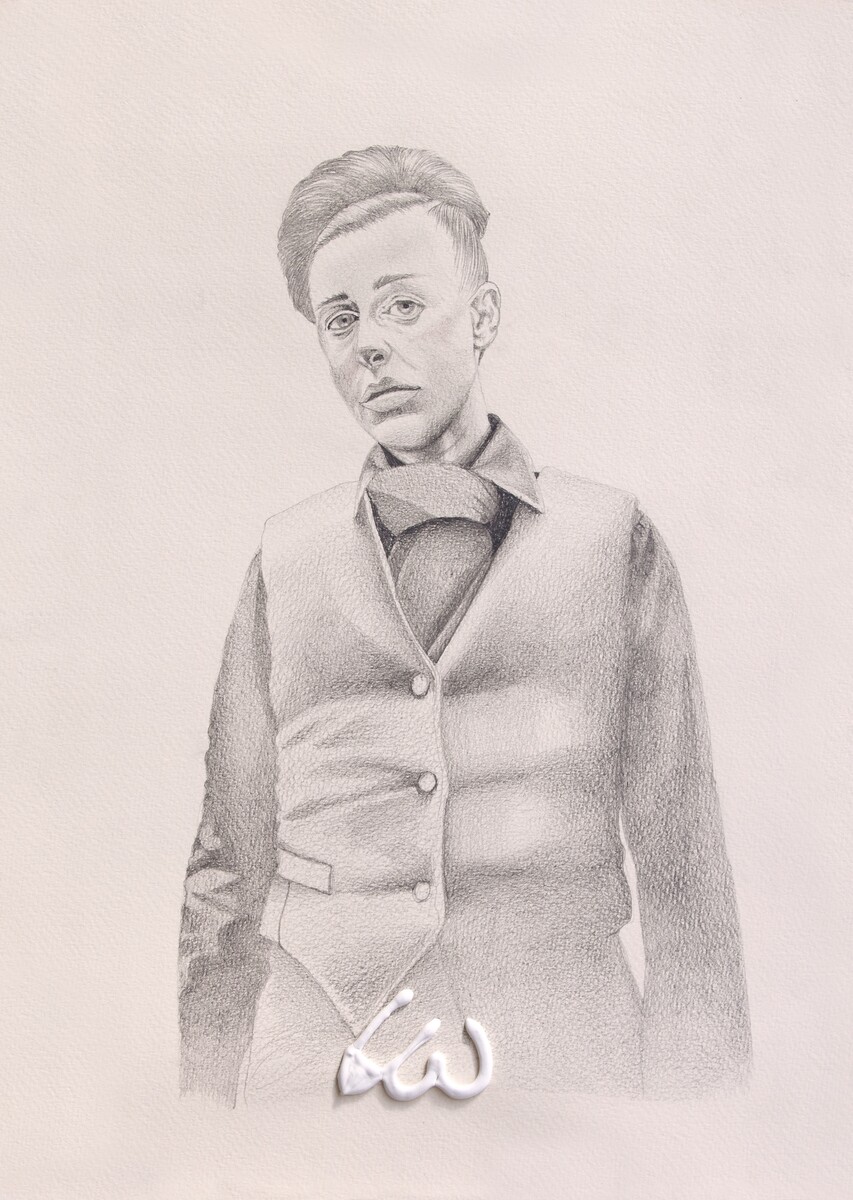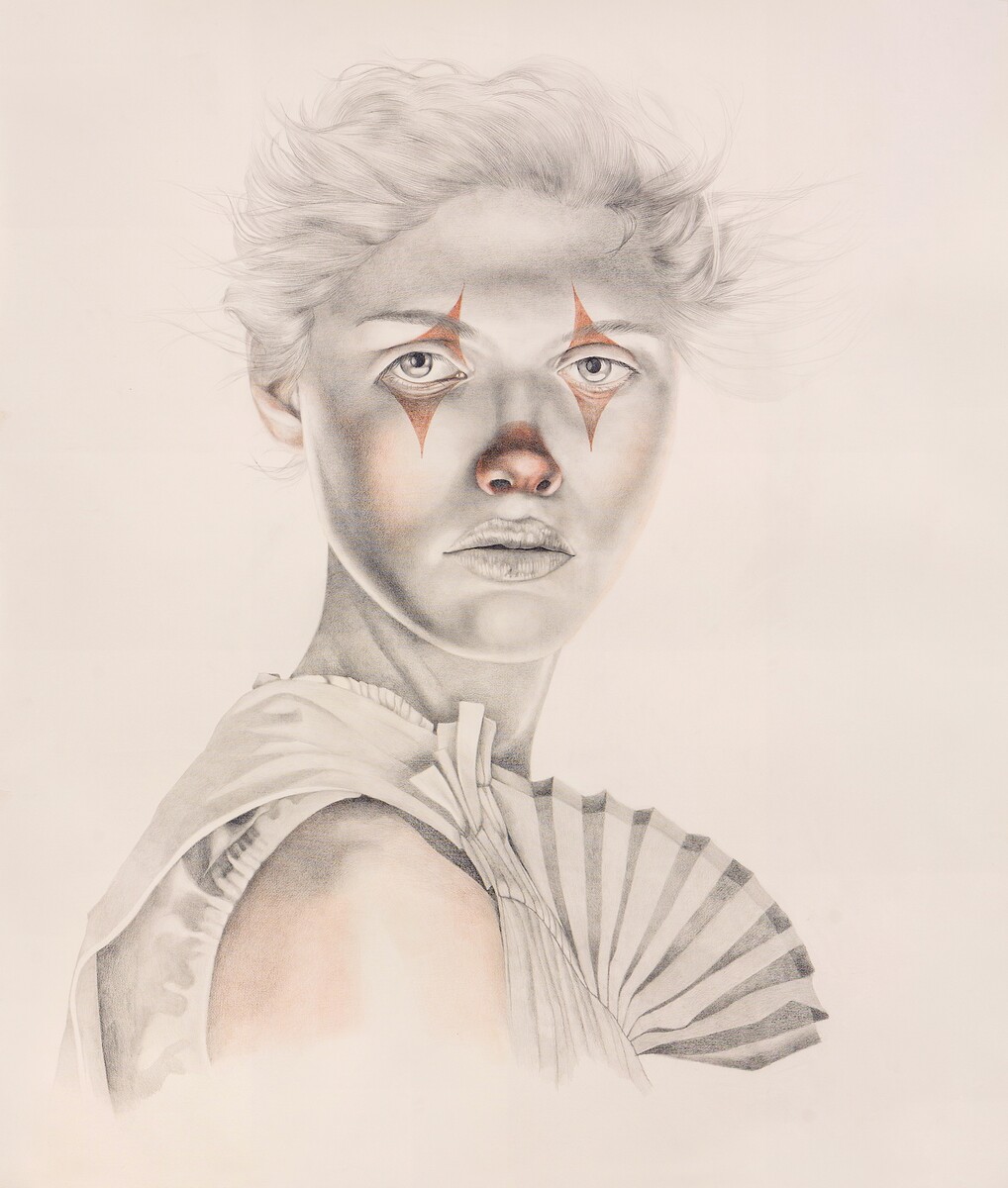
Luciana Rondolini’s work draws on images from the fashion and advertising industries as its starting point: perfect, carefully crafted images with meticulous attention to detail that depict equally perfect, polished women. This is the symbolic marketplace of an ideal of beauty, femininity, and way of being in the world — one that has historically functioned both as a beacon and a constraint for women.
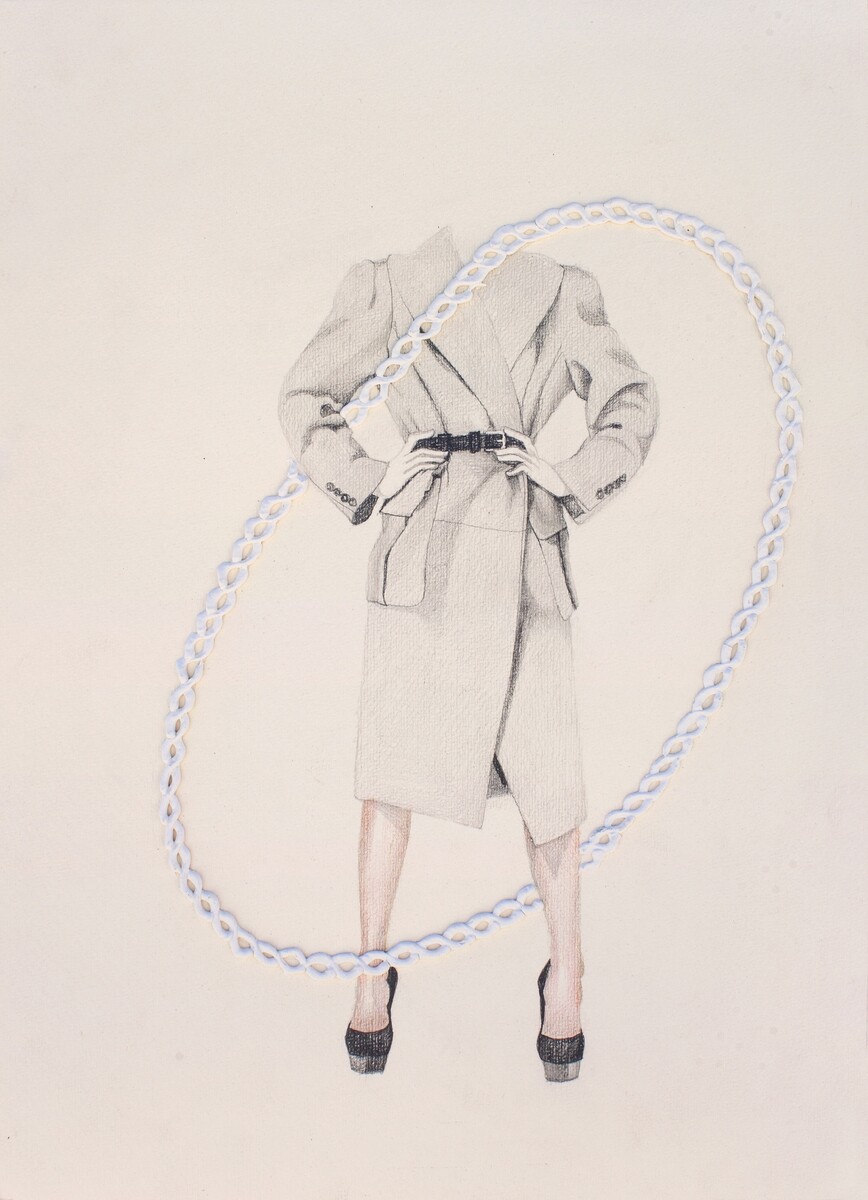
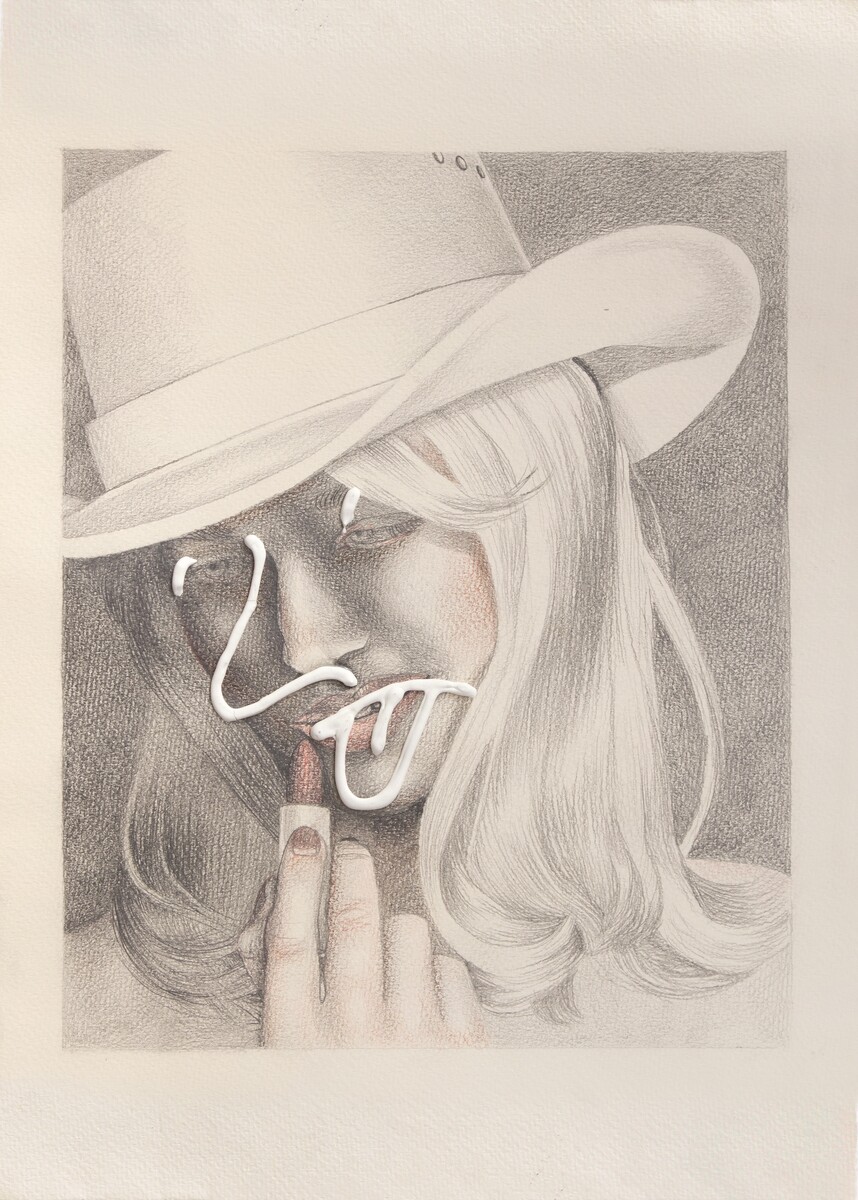
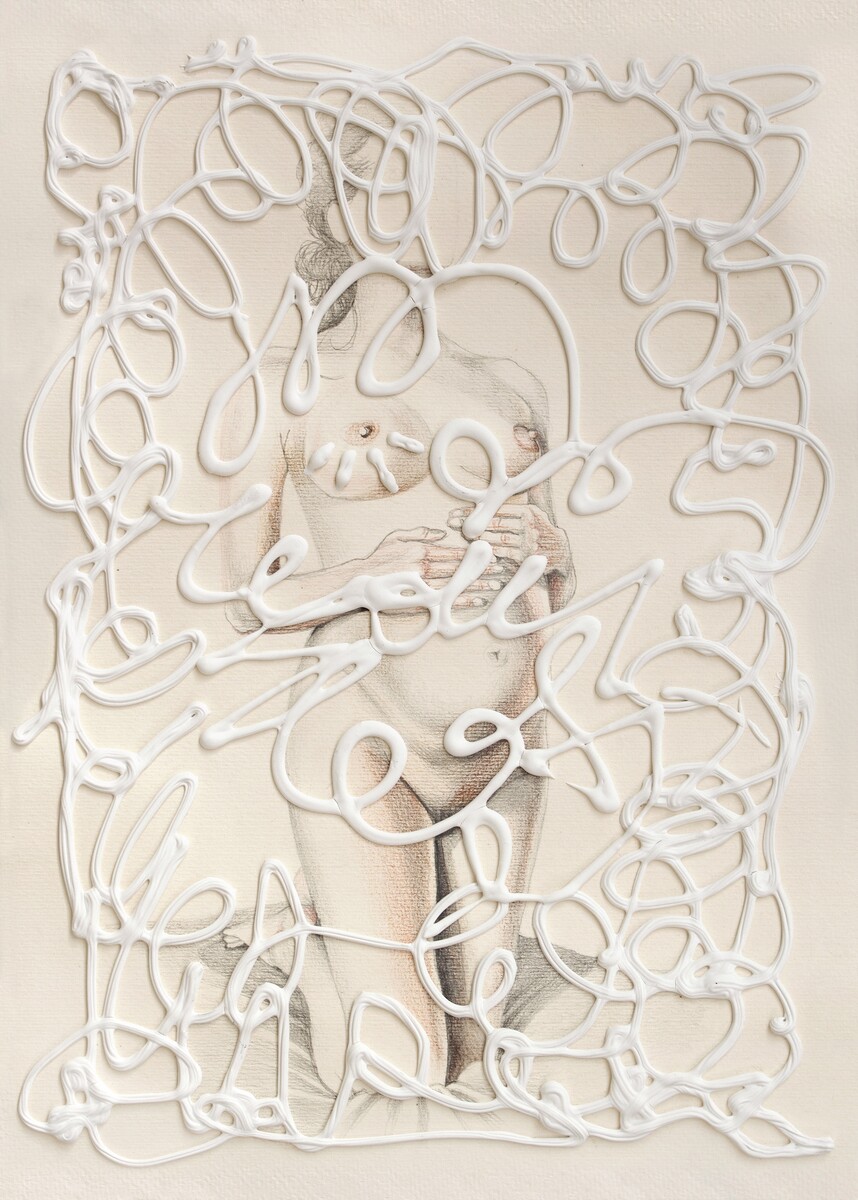
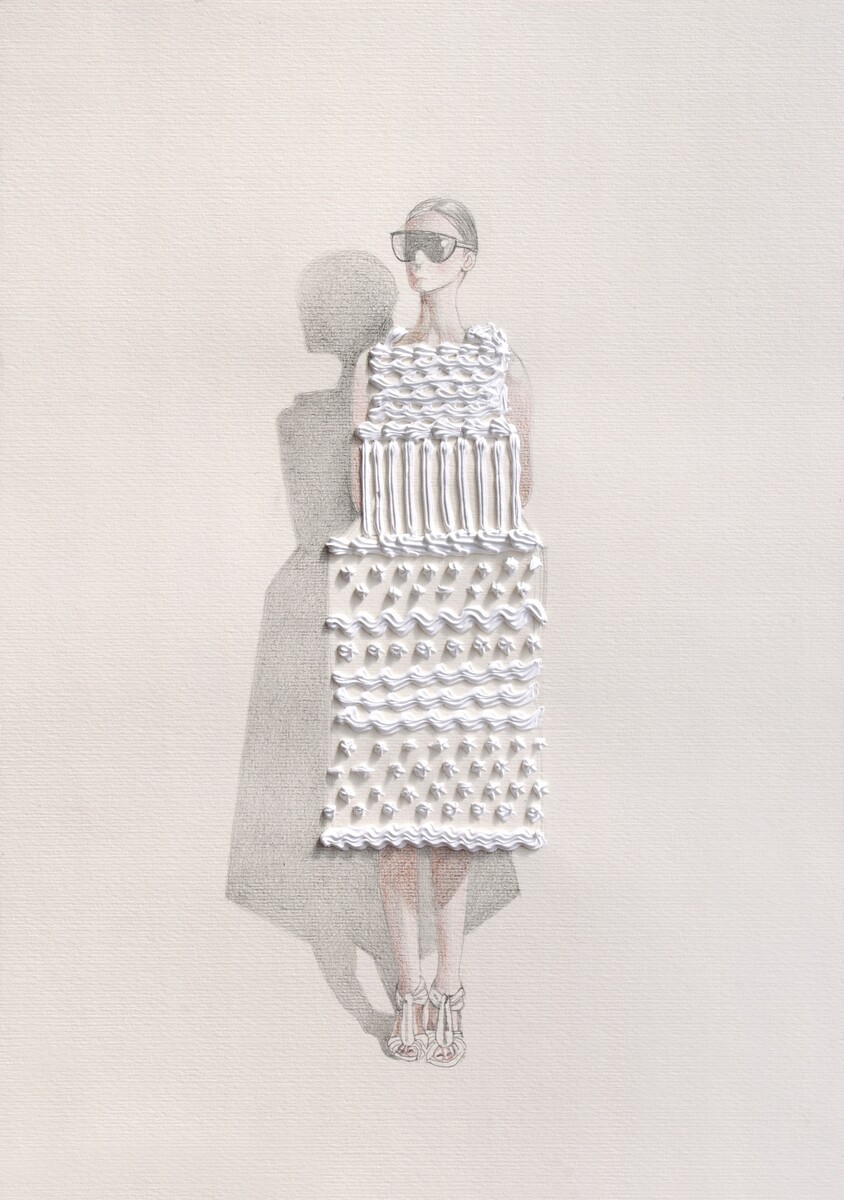
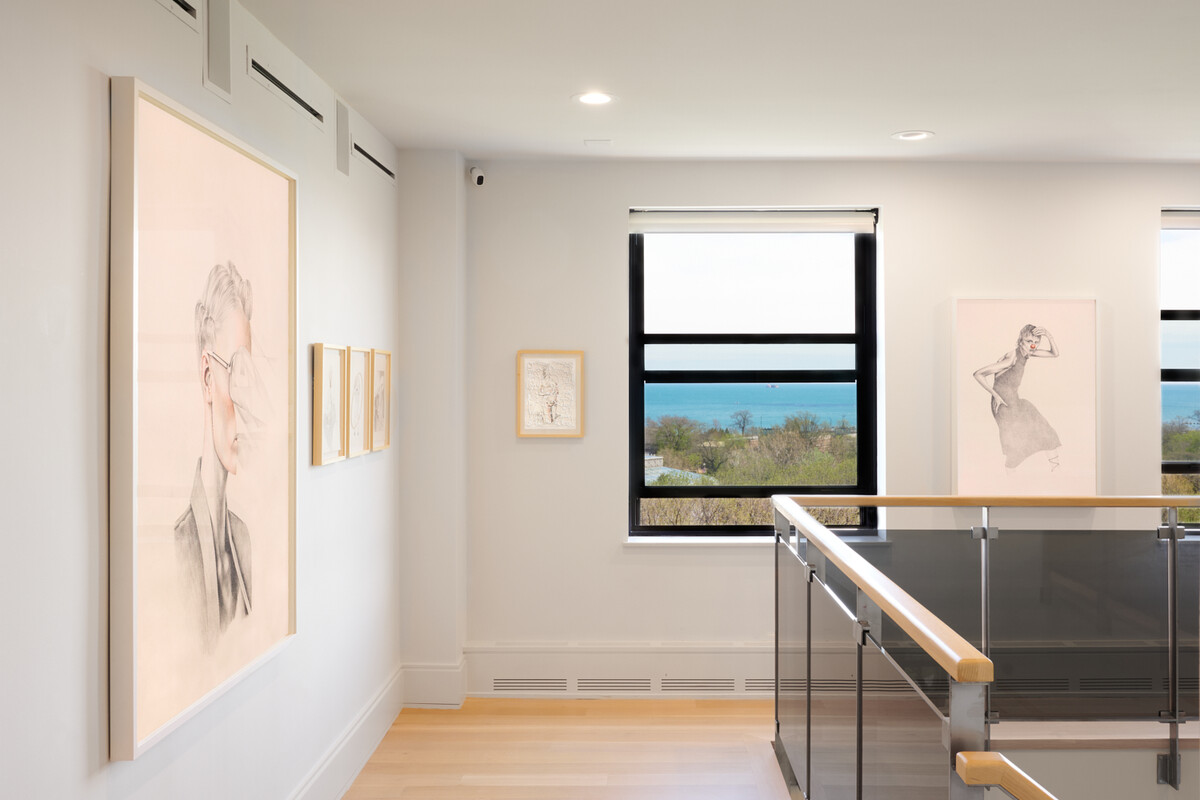
By appealing to that same sense of perfection through hyperrealistic drawing, Rondolini reinterprets these images and then intervenes on them with reddish tones and putty, introducing an ironic twist into her work. In this way, these femmes fatales and contemporary goddesses are placed in situations that put pressure on the underlying premises of a society in which women are subjected to aesthetic standards that define their place within it.
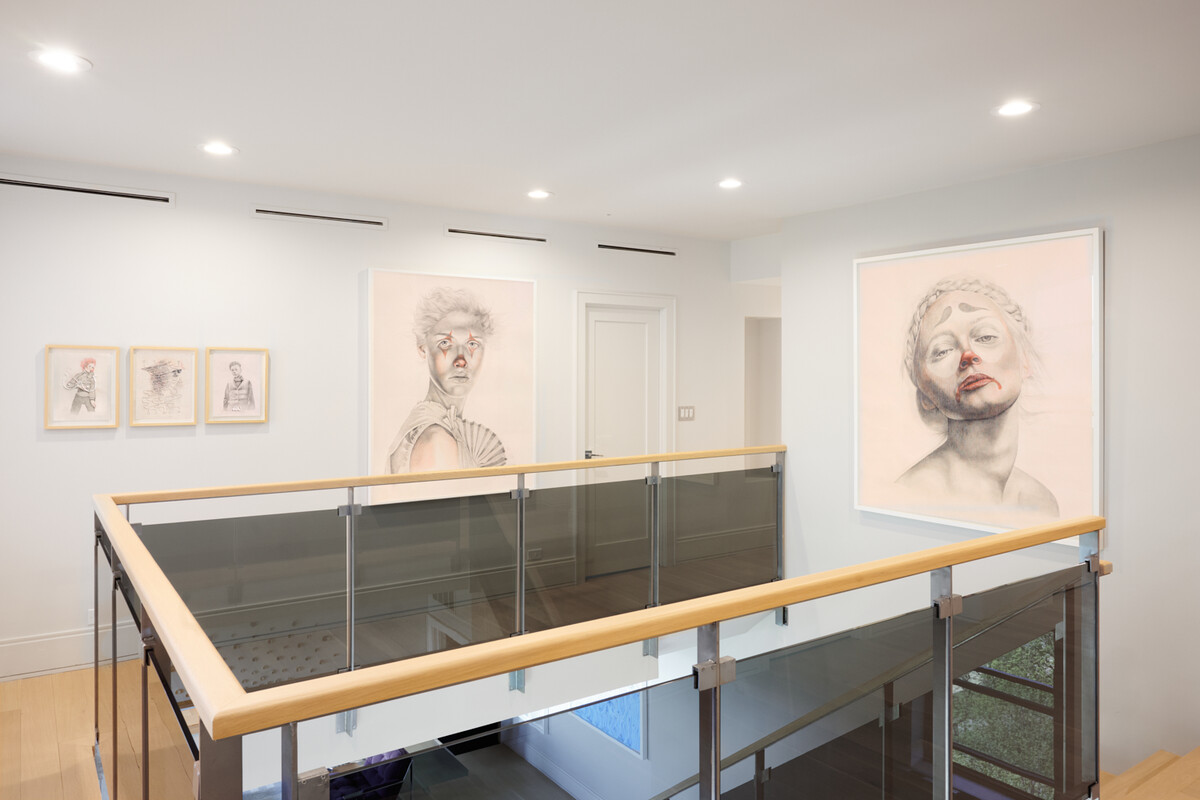
According to the artist herself, “her interest focuses on the world of appearances, a terrain in dispute between surface and essence,” resulting in a body of work that generates ambivalent emotions in the viewer. Rondolini provokes and unsettles, questioning the ways in which each of us chooses to perceive reality and reproduce the social conventions imposed by the media.
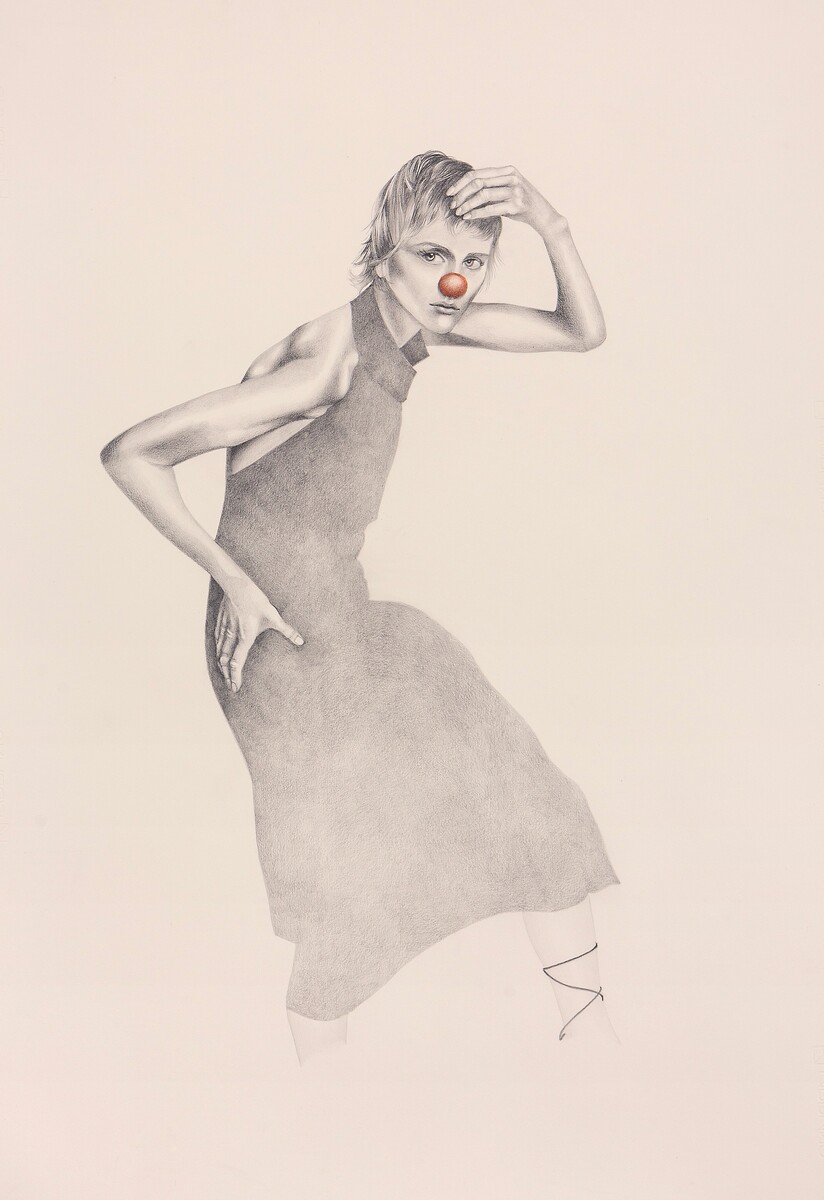
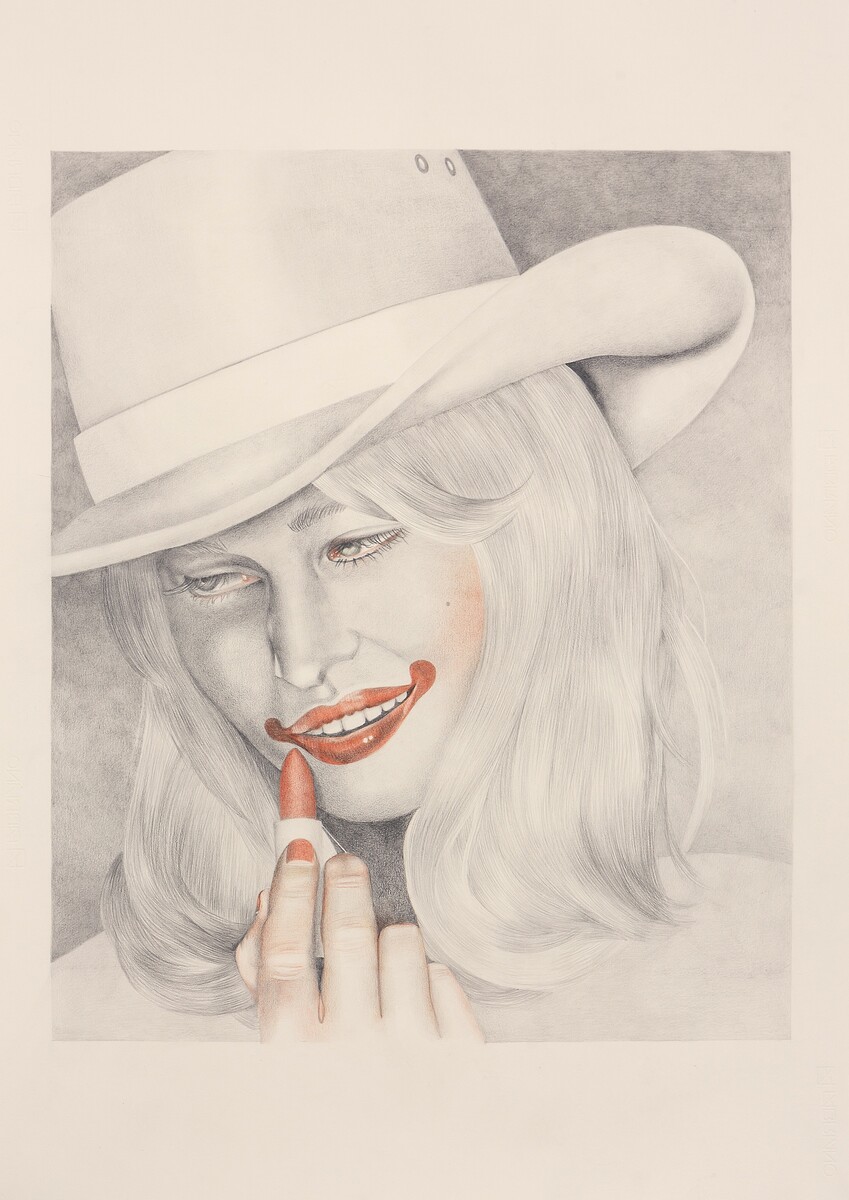
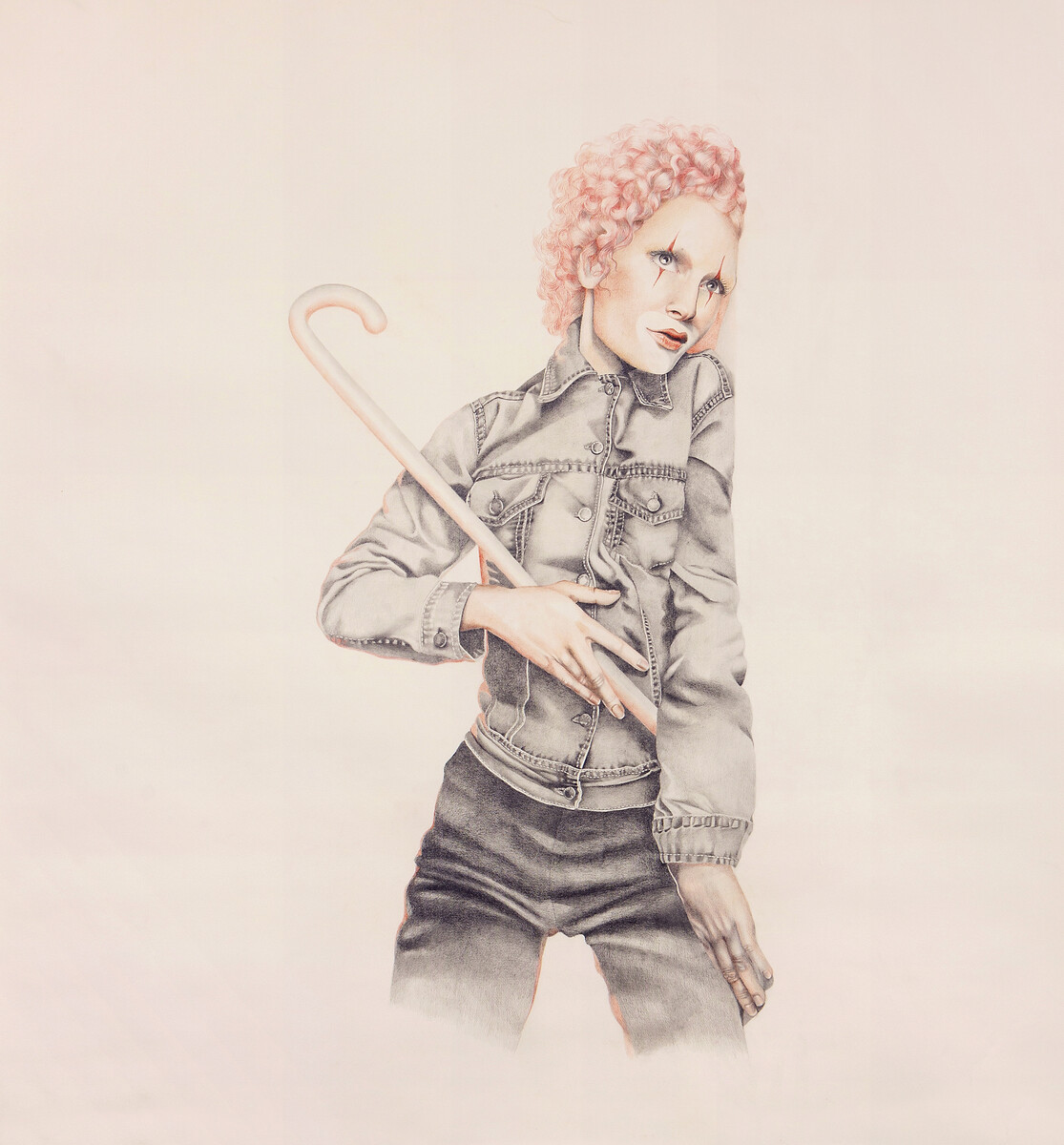
However, in The Perfect Picture, she takes this operation a step further by bringing together drawings that include clear clownish references. Could it be that everything is a farce? Might she be exposing the absurdity of proposing unattainable standards of beauty, treating women as objects?
The clownishness becomes a signifier in itself — of laughter and joy, but also of its opposite: sadness and decay. In fashion or marketing, with their images of perfection, there is no room for sadness, maturity, or old age. Both the clown and advertising present a mask without fully revealing its meaning; however, in the former, that meaning can be ambivalent and ambiguous, adding not only multiple layers of interpretation but also diverse points of view.
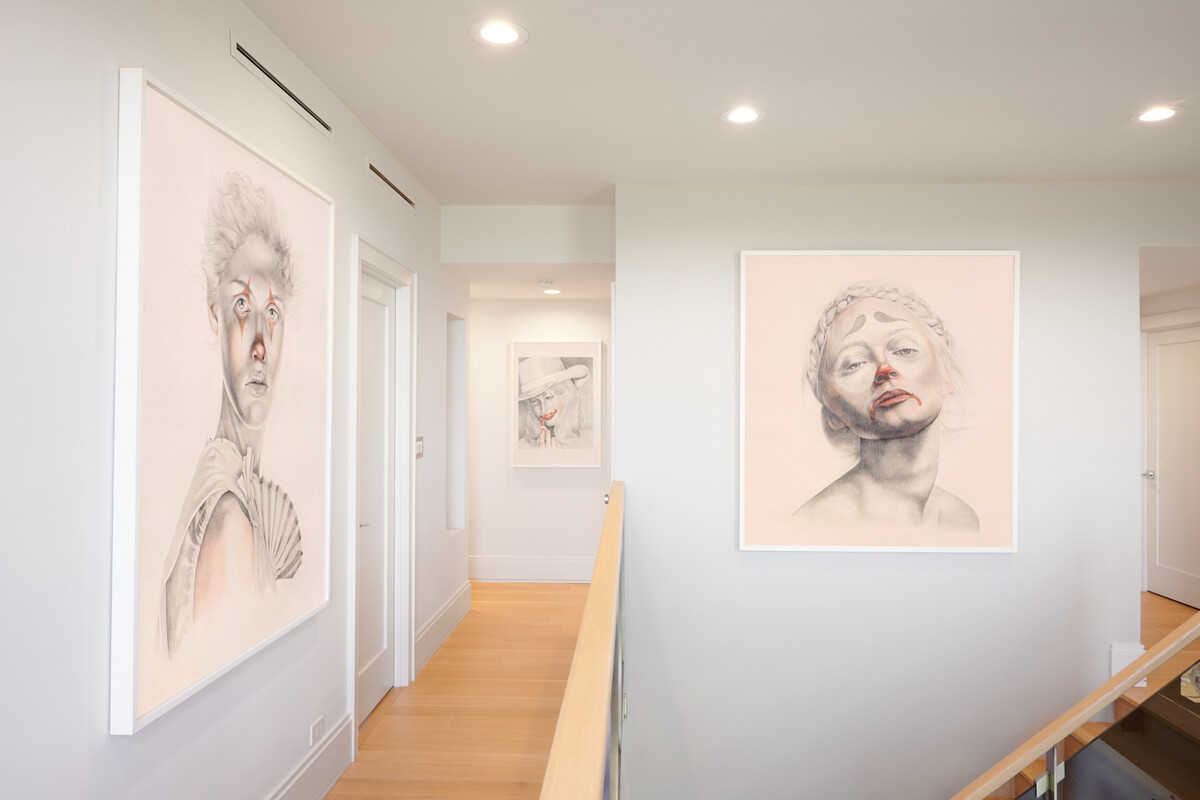
Similarly, The Perfect Picture — the perfect image — is an idea that can be read on different levels within this exhibition. The perfect image as that of the ideal woman according to the social canon promoted by fashion and advertising. Another perfect image is that of the artwork itself: that glorious moment in art when a piece achieves its own fulfillment, reaching a point where nothing can be added or taken away from it. And a third: that of women appropriating the rules of the game and choosing how they want to present themselves and be seen, leaving behind the passive role of models to be displayed to become agents of action.
With this exhibition, Luciana Rondolini condenses one of the underlying premises of her different series into a strong and assertive body of work, seeking to reflect how the feminine is both sacralized and debased. The vandalism of these gestures — using putty or a kind of false makeup over a supposedly perfect image — questions the role and definition assigned to femininity in our society. Without aiming to abolish that feminine model, the artist instead seeks to resignify it through a conscious act of appropriation.
In this way, female autonomy ceases to be a dichotomy between seemingly mutually exclusive models and roles, becoming instead the expression of the possibility of choosing.
Florencia Saba
Buenos Aires, March 2026
—
La obra de Luciana Rondolini apela a las imágenes de la industria de la moda y la publicidad como punto de partida: imágenes perfectas, cuidadas, con máxima atención al detalle que muestran mujeres también perfectas, cuidadas, con máxima atención al detalle. El mercado simbólico de un ideal de belleza, femineidad, forma de ser en el mundo, que funcionó históricamente como faro y corsé para el universo femenino.
Apelando a la misma perfección, por medio del dibujo hiperrealista, Rondolini reversiona estas imágenes para luego intervenirlas con tonos rojizos y enduido, por medio de los cuales da un giro irónico en su obra. De esta manera, estas femmes fatales y diosas contemporáneas son puestas en situaciones que tensionan las premisas subyacentes de una sociedad en la que la mujer es sometida a parámetros estéticos para definir su lugar en la misma.
De acuerdo a la propia artista, “su interés se centra en el mundo de las apariencias, terreno en disputa entre la superficie y la esencia”, con una obra que genera emociones ambivalentes en el espectador. Es así como Rondolini provoca e incomoda, cuestionando los modos en los que cada uno de nosotros elegimos percibir la realidad y reproducir las convenciones sociales impuestas por los medios de comunicación.
Pero es en The Perfect Picture que lleva su operatoria un paso más allá, al reunir aquellos dibujos en los que se presentan claros guiños clownescos. ¿Será que todo es una payasada? ¿Será que pone en evidencia de este modo lo irrisorio de plantear modelos de belleza inalcanzables, tratando a las mujeres como objetos?
Lo payasesco es un significante en sí mismo, el de la risa y la alegría aunque, también, el de su contracara: lo triste, lo decadente. En la moda o el marketing y sus imágenes de perfección no hay lugar para la tristeza, la madurez, la vejez. Tanto lo payasesco como la publicidad muestran una máscara sin revelar del todo su sentido aunque, en el caso del primero, ese sentido puede ser ambivalente y ambiguo, sumando no solo diversas capas de lectura sino también puntos de vista.
De la misma forma, The Perfect Picture, la imagen perfecta, es una idea que puede leerse a diferentes niveles en esta muestra. La imagen perfecta, aquella de la mujer ideal de acuerdo al canon social mostrado por la moda y la publicidad. La otra imagen perfecta, la de la obra: ese momento glorioso del arte en que una obra logra su propia realización llegando al punto en que no se le puede ni agregar ni quitar nada. Y la tercera: la de las mujeres apropiándose de las reglas del juego y eligiendo cómo quieren presentarse y ser vistas, dejando el rol pasivo de modelos a ser mostradas para pasar a ser sujetos de una acción.
Con esta muestra Luciana Rondolini condensa una de las premisas que subyacen las diferentes series de su trabajo en un cuerpo de obra fuerte y asertivo, buscando reflejar cómo lo femenino es a la vez sacralizado y bastardeado. El vandalismo de estos gestos en enduido o falso maquillaje sobre una imagen supuestamente perfecta cuestiona el rol y la definición dados a lo femenino en nuestra sociedad. Sin buscar abolir ese modelo femenino, la artista busca por este medio, resignificar en una apropiación consciente.
De esta manera, la autonomía femenina pasa a dejar de ser una dicotomía entre modelos y roles aparentemente excluyentes, sino la expresión de la posibilidad de elegir.
Florencia Saba
Buenos Aires, marzo de 2026